Private tutoring
The choice between weekly tutoring sessions and an intensive course depends above all on the goal: regular follow-up suits difficulties that build up gradually, while a concentrated course meets an upcoming deadline or a well-defined need. The total cost, how the hours are spread and the work planned after the sessions are key criteria for comparing the two options.
Émilie Zajdman·23 October 2026·12 min read
School success and study choices
A useful diagnosis means working back from the visible mistake to the missing prerequisite: calculation, signs, the distributive property, setting up equations. Rather than redoing all of collège, test a few targeted skills and find the first breaking point. The mark is not enough: look at the marked paper and at exercises done cold to tell a one-off difficulty from a lasting blockage.
Émilie Zajdman·23 October 2026·10 min read
Private tutoring
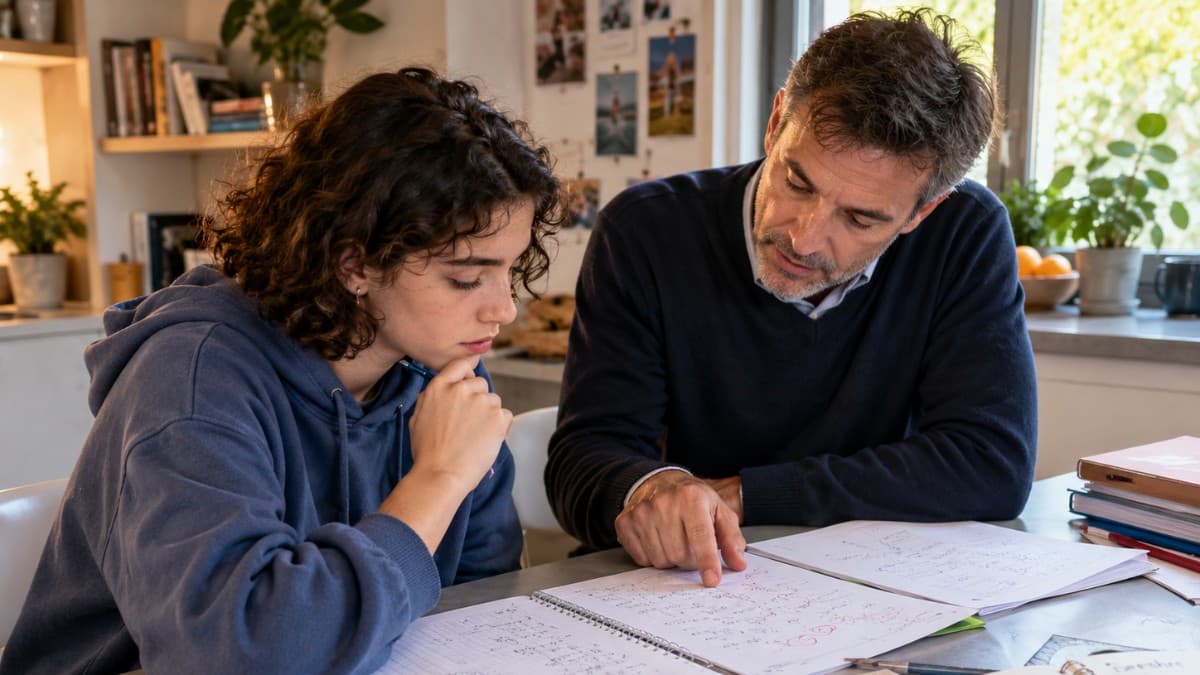
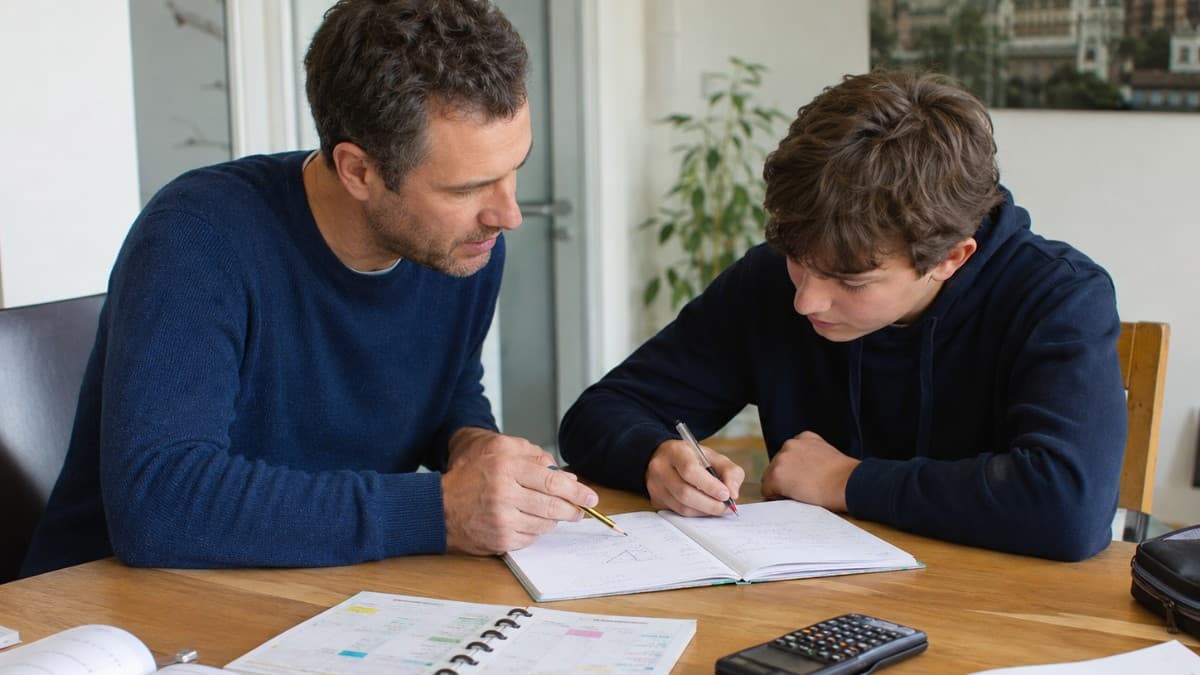
One-to-one tutoring maximises personalisation and the tutor’s attention, but generally costs more. Small-group tutoring (2 to 5 students) lowers the cost per student and brings emulation, but the pace is a compromise. Neither format is always better: it all depends on the student’s gaps, independence and budget.
Émilie Zajdman·23 October 2026·11 min read
School success and study choices
In Seconde (the first year of lycée), maths difficulties often stem from fragile foundations from collège meeting a higher level of abstraction. Key points to master include algebra, functions and writing up justified reasoning. Targeted catch-up work, combining worked examples and independent exercises, consolidates prerequisites without relearning everything. The new 2026-2027 curriculum raises these expectations, notably on automatic skills and logic.
Émilie Zajdman·23 October 2026·13 min read
School success and study choices
A maths tutoring session at collège (lower secondary school) targets the precise source of the blockage (basic skills, reasoning, method). One session a week is enough for a targeted difficulty; a more intensive pace may be needed when gaps have built up. After 6 to 8 weeks, progress is assessed on independence and fewer recurring mistakes, not only on marks.
Émilie Zajdman·23 October 2026·12 min read
School success and study choices
A failed Maths test should first serve as a diagnosis: classify the mistakes (calculation, method, prerequisites, autonomy) before starting revision again. Over 14 days, you do not go back over the whole curriculum: you target one or two main causes, check the prerequisites and redo targeted exercises until you can succeed without help.
Émilie Zajdman·23 October 2026·9 min read
School success and study choices
The first month should not be spent redoing chapters, but identifying the precise step where the student gets stuck. By testing a few prerequisites and classifying mistakes, the tutor can build targeted work over two to six weeks.
Émilie Zajdman·23 October 2026·9 min read
Private tutoring
The French tax credit for personal services applies to home tutoring with the tutor physically present, subject to conditions, at 50% of expenses within the annual ceiling (€12,000, which can be increased). Remote academic support, whether via the internet or by correspondence, is explicitly excluded.
Émilie Zajdman·23 October 2026·11 min read
Private tutoring
There is no single right profile: a university student, a teacher and a level specialist can all be suitable depending on the student’s need. Start by identifying the precise block (gap, method, reasoning, practice), then assess the tutor’s ability to rephrase when the student doesn’t understand. Academic level does not guarantee teaching quality.
Émilie Zajdman·23 October 2026·9 min read
Private tutoring
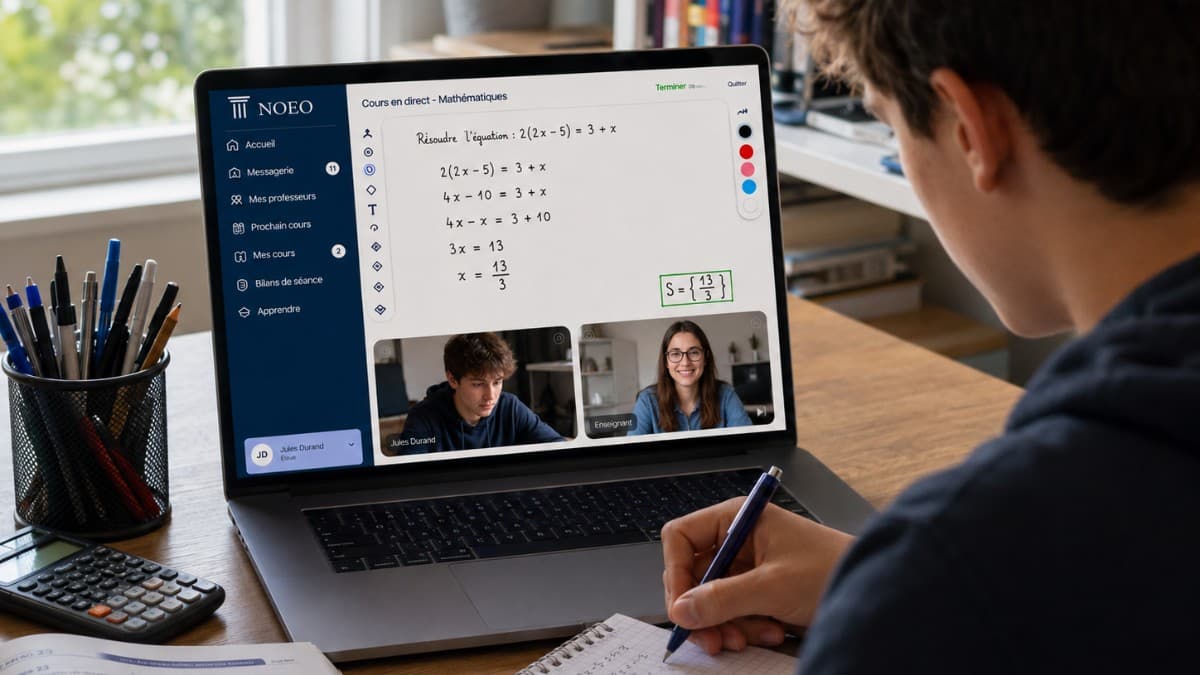
The best online private tutoring site depends on your priorities: a wide choice of profiles (Superprof), delegated selection (Acadomia), educational follow-up (Les Sherpas), an integrated online environment (GoStudent) or continuity between sessions (NOEO). Compare the models on total cost, commitment, tools and follow-up to choose the one that meets your expectations.
Émilie Zajdman·23 October 2026·16 min read
Private tutoring
How often to have private tutoring depends on the goals: 1 weekly session is enough for regular follow-up or a targeted difficulty, while 2 or more sessions may be needed to catch up on a significant gap or prepare for an approaching deadline. Effectiveness rests on regularity, targeting and the student’s own work between sessions.
Émilie Zajdman·23 October 2026·9 min read
Methods and revision
A maths flashcard should contain a precise, checkable piece of information: a definition, a formula with its condition, an automatic skill or a pitfall. Exercises, on the other hand, are for learning to choose a method, calculate and justify. After a session, select three to five cards, then practise on real problems.
Émilie Zajdman·23 October 2026·10 min read
School success and study choices
The épreuve anticipée (early exam) in maths for students in Première (the second year of lycée) in 2026-2027 is set for Monday 21 June 2027. It lasts 2 hours, without a calculator, and comprises automatic-skills questions (6 points) followed by two or three exercises (14 points). Preparation should begin in the autumn with a diagnosis and work on automatic skills.
Émilie Zajdman·23 October 2026·11 min read
Tutors
To set your private tutoring rate, you need to take into account the level taught, the subject, your experience and the time you actually spend (preparation, follow-up, sessions). In 2026, observed rates range from €18-25/h for collège (lower secondary school) to €22-35/h for lycée (upper secondary school), but these ranges depend on the profile and the service provided. A consistent rate also builds in the invisible time (preparation, follow-up) to work out real income per hour of work.
Émilie Zajdman·23 October 2026·12 min read
Private tutoring
In 2026, the rate cards published by market players most often place academic support between €20 and €45 an hour, from about €15 at primary level up to €60 for some higher-education subjects (Cours Legendre, Superprof, March 2026 surveys). The real cost also depends on the tutor, the subject, the format and platform fees; the tax credit for services à la personne (home-based personal services) does not apply to online tutoring.
Émilie Zajdman·23 October 2026·13 min read