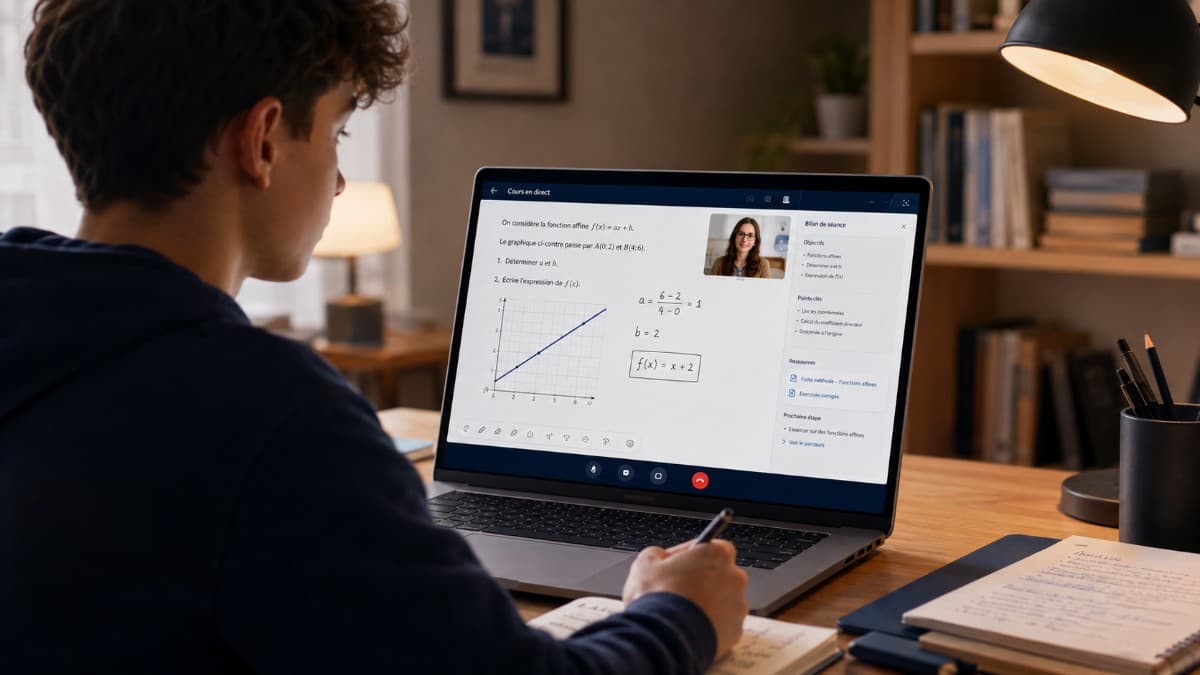
Effective private tutoring does not depend solely on the tutor’s academic level. It also rests on understanding the need, the quality of the teaching relationship, regular sessions and the ability to track progress over time.
This section brings together guides to choosing a private tutor, comparing online and at-home tutoring, understanding prices, setting the right pace and preparing a first session. It helps students and parents build support suited to the subject, the school level and the goal in mind.
The articles also cover what happens before and after the session: preparation, exercises, the session report, documents, replays and next steps. The aim is to turn private tutoring into a continuous path rather than an isolated appointment.
Private tutoring
For a specific gap, two or three targeted sessions are often enough during the Toussaint break (the autumn half-term holiday around All Saints’ Day); an intensive course becomes useful when several prerequisites are shaky. Start by diagnosing the difficulty, then compare the options on practice, spacing and how the result will be measured.
Sébastien Lochon·23 October 2026·10 min read
Private tutoring
Work between two private tutoring sessions should be short, precise and tied to a difficulty spotted during the session. It might mean recalling a rule, starting an exercise alone or noting what is blocking them. If school homework is already enough, adding nothing is an acceptable decision.
Sébastien Lochon·23 October 2026·10 min read
Private tutoring
Before planning a catch-up programme, take 25 minutes to identify what is really holding your child back: a forgotten concept, a poorly understood method or a lack of independence. The diagnosis helps you decide between rest, targeted revision or support from a tutor.
Sébastien Lochon·23 October 2026·13 min read
Private tutoring
The choice between weekly tutoring sessions and an intensive course depends above all on the goal: regular follow-up suits difficulties that build up gradually, while a concentrated course meets an upcoming deadline or a well-defined need. The total cost, how the hours are spread and the work planned after the sessions are key criteria for comparing the two options.
Émilie Zajdman·23 October 2026·12 min read
Private tutoring
After a tutoring session, a parent needs five pieces of information: what was worked on, what has been acquired, what is still fragile, the work to do before the next session and the recommendation for what comes next. Vague feedback such as “it all went well” is not enough: these elements make it possible to decide concretely what to do next.
Sébastien Lochon·23 October 2026·10 min read
Private tutoring
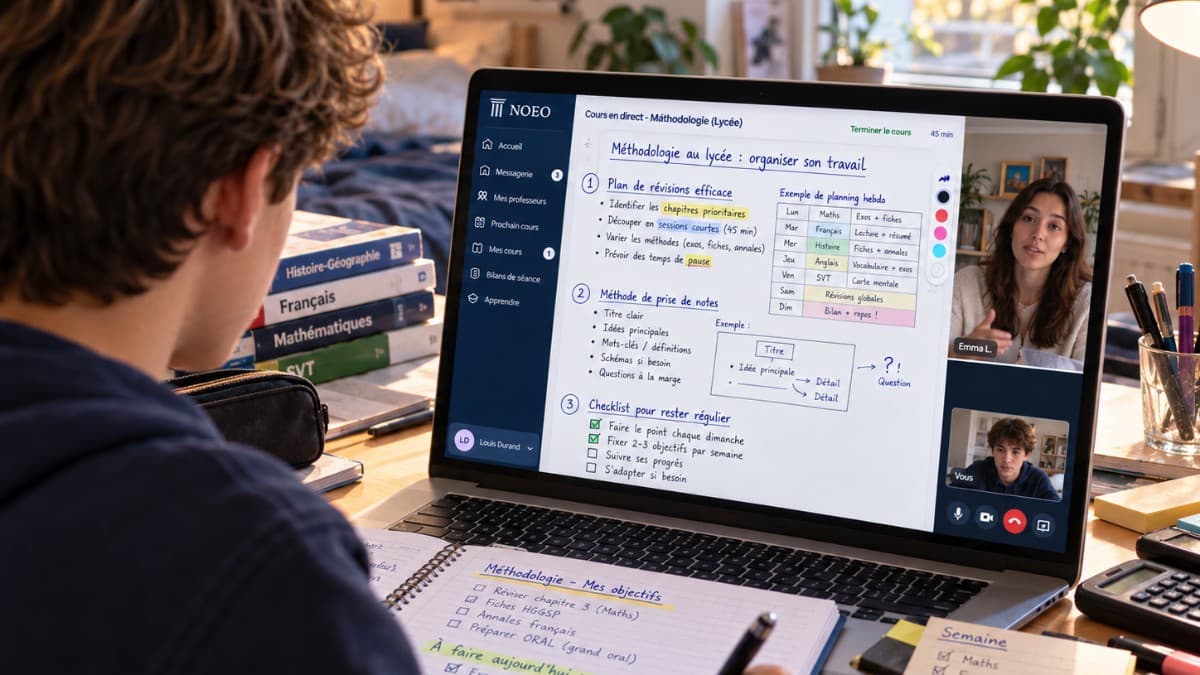
Study skills tutoring at lycée (upper secondary school) works on organisation, learning strategies, methods for school tasks and self-assessment. Its aim is to diagnose the real blockage, then test strategies on actual lessons to make the student independent.
Sébastien Lochon·23 October 2026·8 min read
Private tutoring
One-to-one tutoring maximises personalisation and the tutor’s attention, but generally costs more. Small-group tutoring (2 to 5 students) lowers the cost per student and brings emulation, but the pace is a compromise. Neither format is always better: it all depends on the student’s gaps, independence and budget.
Émilie Zajdman·23 October 2026·11 min read
Private tutoring
In Terminale (the final year of lycée), private tutoring is effective when it targets a specific difficulty (a specialism, Philosophy, the Grand oral). Start in September for a gap identified in Première, or after the first assessments if the level is uncertain. One session a week is often enough for a targeted need, avoiding overloading an already busy timetable.
Sébastien Lochon·23 October 2026·13 min read
Private tutoring
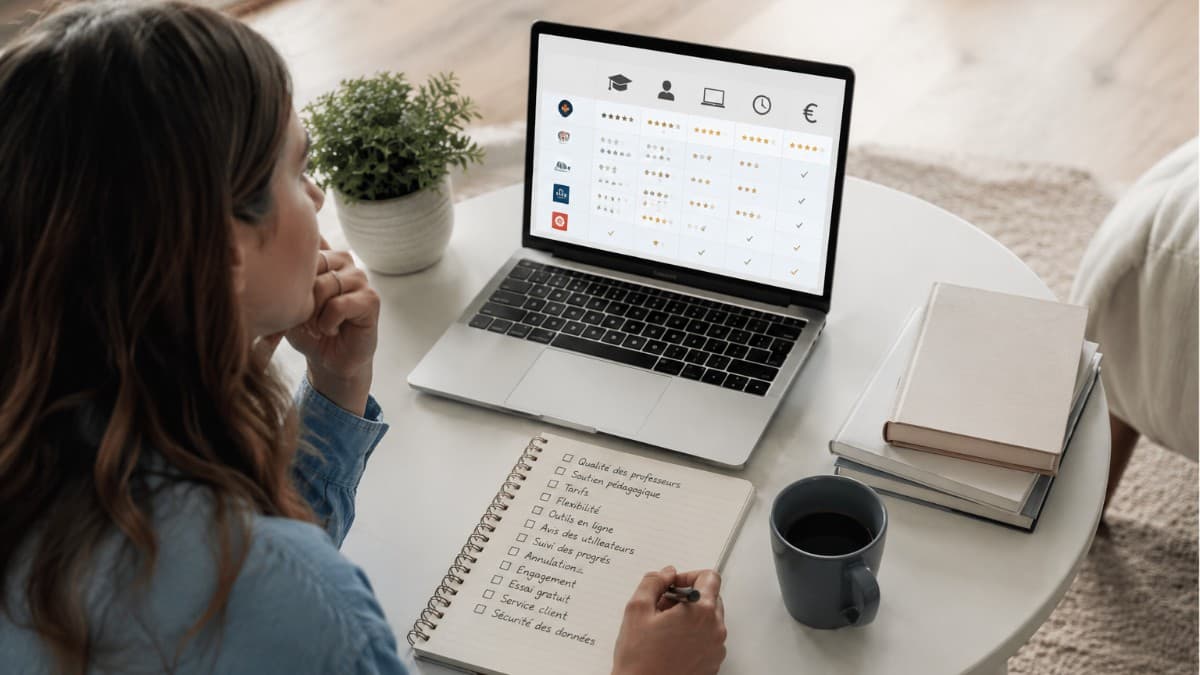
To choose a private tutoring platform, assess 12 key criteria: catalogue model (marketplace or selection), guidance, profile verification, precision of profiles, final price, commitment, session tools, technical reliability, preparation, follow-up after the session, parental oversight and support. These factors determine the quality of the service beyond the hourly rate displayed.
Pierre Basile·23 October 2026·14 min read
Private tutoring
The French tax credit for personal services applies to home tutoring with the tutor physically present, subject to conditions, at 50% of expenses within the annual ceiling (€12,000, which can be increased). Remote academic support, whether via the internet or by correspondence, is explicitly excluded.
Émilie Zajdman·23 October 2026·11 min read
Private tutoring
A session report after a private tutoring session should let the parent understand four things without having attended: what was actually worked on, what the student now masters better, what remains fragile and what they need to prepare before the next session. The report does not need to be long, but it must be precise. “Good session, needs reviewing” gives little information; “simple equations are mastered, sign errors are still frequent, redo exercises 3 and 4 before Tuesday” makes it possible to act. Good follow-up therefore serves the parent, the student and the tutor who will prepare the next session, all at the same time.
Sébastien Lochon·23 October 2026·14 min read
Private tutoring
NOEO is a French online private tutoring platform designed to structure the whole learning relationship around the session: choosing or inviting the tutor, session plan, live tutoring, session report, documents, work to prepare, replays when available and revision tools. Its aim is not to replace the tutor with a platform or an AI, but to prevent each session from standing in isolation. The student keeps a thread of work, the parent has appropriate visibility and the tutor finds in their tutor space the information needed to prepare for and follow up with their students. NOEO is therefore aimed above all at those looking for ongoing support, entirely online.
Sébastien Lochon·23 October 2026·11 min read