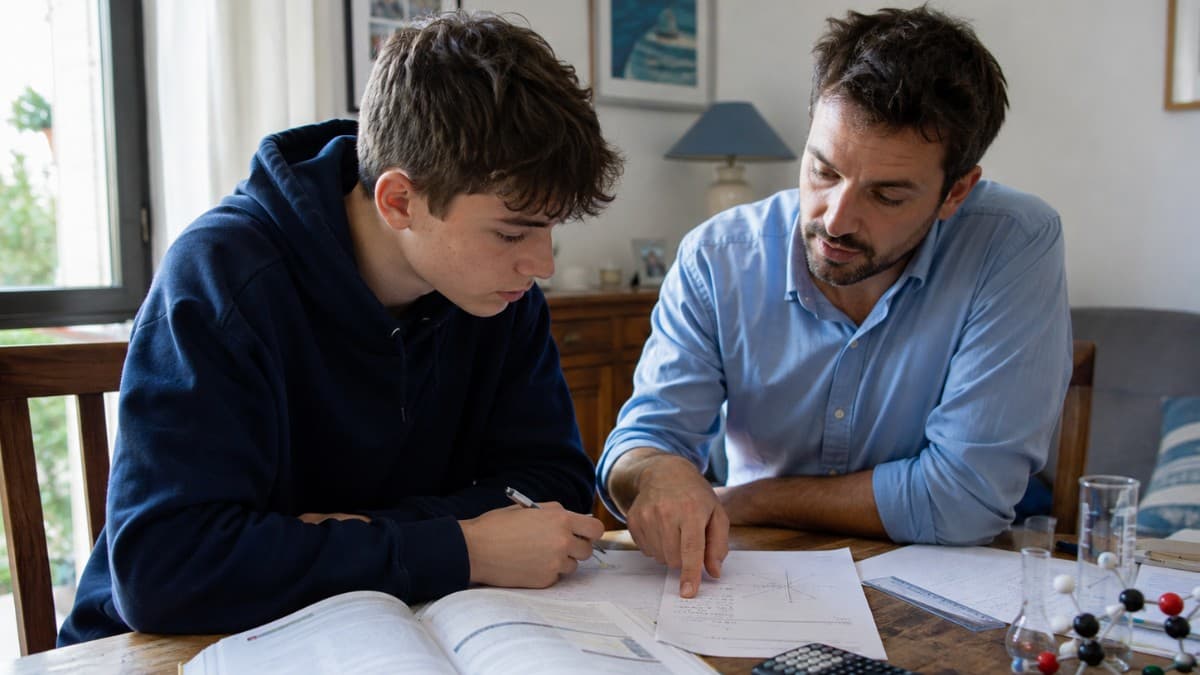
Success at school is not just an average grade. It depends on understanding what is expected, using suitable study methods, making steady progress and the student’s ability to picture their own path ahead.
This section helps students and families identify difficulties, prepare for key milestones and make better-informed decisions. It covers in particular collège (lower secondary school), lycée (upper secondary school), the Brevet (the end-of-collège exam), the baccalauréat (the French school-leaving exam), the choice of specialisation subjects, Parcoursup (the national higher-education admissions platform) and the various study and career options.
The content distinguishes official information, methodological advice and situations that call for individual support. Information on curricula, calendars or admission procedures is dated and backed by verifiable sources.
School success and study choices
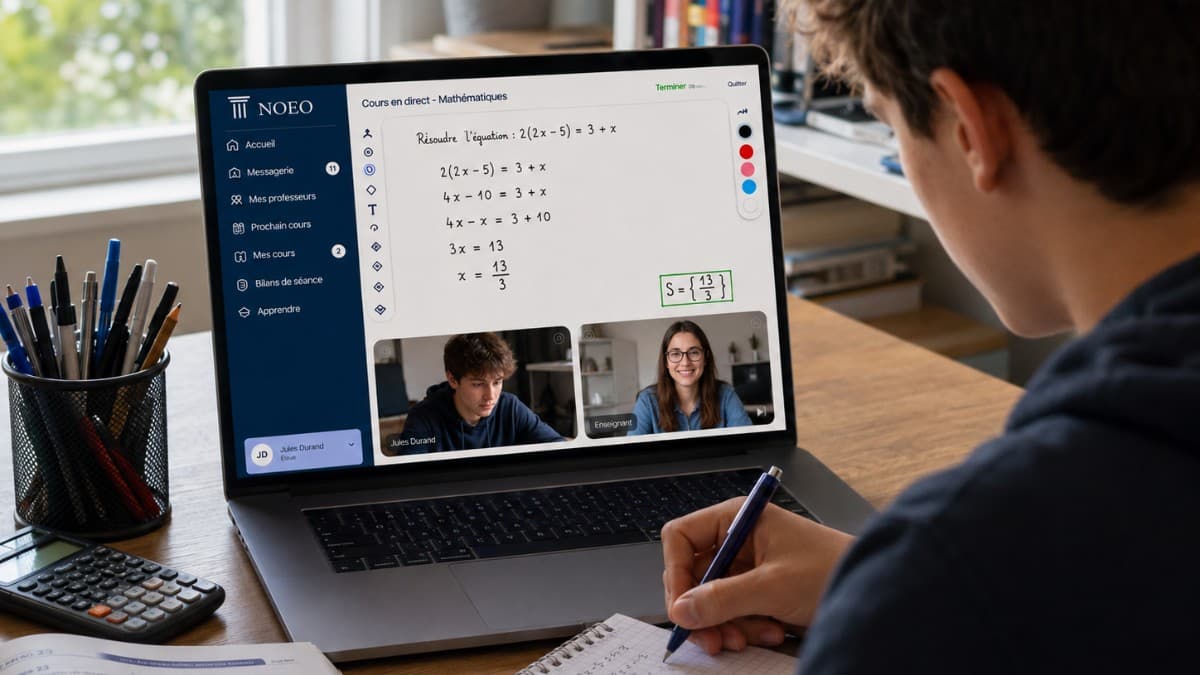
A useful diagnosis means working back from the visible mistake to the missing prerequisite: calculation, signs, the distributive property, setting up equations. Rather than redoing all of collège, test a few targeted skills and find the first breaking point. The mark is not enough: look at the marked paper and at exercises done cold to tell a one-off difficulty from a lasting blockage.
Émilie Zajdman·23 October 2026·10 min read
School success and study choices
In Seconde (the first year of lycée), maths difficulties often stem from fragile foundations from collège meeting a higher level of abstraction. Key points to master include algebra, functions and writing up justified reasoning. Targeted catch-up work, combining worked examples and independent exercises, consolidates prerequisites without relearning everything. The new 2026-2027 curriculum raises these expectations, notably on automatic skills and logic.
Émilie Zajdman·23 October 2026·13 min read
School success and study choices
A maths tutoring session at collège (lower secondary school) targets the precise source of the blockage (basic skills, reasoning, method). One session a week is enough for a targeted difficulty; a more intensive pace may be needed when gaps have built up. After 6 to 8 weeks, progress is assessed on independence and fewer recurring mistakes, not only on marks.
Émilie Zajdman·23 October 2026·12 min read
School success and study choices
Getting stuck on functions in Seconde (the first year of lycée) often hides a gap in a collège prerequisite: calculating with negative numbers, substitution, reading coordinates, image/preimage vocabulary or switching between representations. To make progress, you need to pinpoint the exact step that fails and test the skill just before it. Mistakes can then be classified into four types: calculation, vocabulary, representation and strategy.
Sébastien Lochon·23 October 2026·9 min read
School success and study choices
A failed Maths test should first serve as a diagnosis: classify the mistakes (calculation, method, prerequisites, autonomy) before starting revision again. Over 14 days, you do not go back over the whole curriculum: you target one or two main causes, check the prerequisites and redo targeted exercises until you can succeed without help.
Émilie Zajdman·23 October 2026·9 min read
School success and study choices
The first month should not be spent redoing chapters, but identifying the precise step where the student gets stuck. By testing a few prerequisites and classifying mistakes, the tutor can build targeted work over two to six weeks.
Émilie Zajdman·23 October 2026·9 min read
School success and study choices
A difficulty in Maths does not mean a student is “hopeless at Maths”. In practice, you first need to distinguish three common mechanisms: a poorly mastered prerequisite, an unsuitable problem-solving method or insufficient practice. They can add up. A good diagnosis therefore does not start only from the mark, but from the mistakes: can the student carry out the basic step? can they choose a strategy? do they only succeed with help? do they repeat a mistake despite the correction? In twenty minutes, a few well-chosen exercises and an explanation out loud often make it possible to know which lead to work on first.
Sébastien Lochon·23 October 2026·12 min read
School success and study choices
A good method for the philosophy essay does not consist in mechanically applying a three-part plan. You first need to understand exactly the question asked, define its terms, bring out the problem it contains, then build a step-by-step answer based on relevant arguments, distinctions, examples and references. At the baccalauréat (the French school-leaving exam), the essay therefore assesses less the ability to recite a course than the ability to use your knowledge to deal with a specific question. The priority is simple: every stage of the paper must move the problem closer to a solution.
Sébastien Lochon·23 October 2026·15 min read
School success and study choices
Private French tutoring at collège (lower secondary school) should identify the difficulties precisely (reading, grammar, spelling, expression) in order to work on them methodically. Prioritise problems that affect several skills, such as a limited vocabulary or fragile syntax. One targeted session a week, with concrete exercises and explicit corrections, leads to measurable progress in autonomy and fewer recurring mistakes.
Sébastien Lochon·23 October 2026·13 min read
School success and study choices
To prepare effectively for the bac de français (the French exam taken at the end of Première), you need to work on three dimensions in parallel: the method for the written exercises, precise knowledge of the works and texts studied, and regular oral practice. Rereading your notes is not enough. In the written exam, the student must be able to build a commentary or an essay within a time limit; in the oral, they must explain a text, answer a grammar question and then defend a chosen work. Preparation should begin during the Première year, with short practice sessions that gradually become timed. The aim is not to learn model answers by heart, but to become able to draw on the right knowledge alone when faced with a new topic or extract.
Sébastien Lochon·23 October 2026·16 min read
School success and study choices
To make progress with SVT (Life and Earth Sciences) private tutoring at lycée, learning the course is necessary but not sufficient. The student must be able to use their knowledge to explain a mechanism, analyse scientific documents, connect several scales and build a reasoned answer. A private tutor is most useful when they pinpoint exactly what is blocking: poorly memorised knowledge, imprecise vocabulary, superficial reading of documents or difficulty organising the reasoning. Effective work therefore alternates active memorisation, explaining mechanisms, data analysis, diagrams and synthesis exercises. In the SVT specialty, this method also prepares for both parts of the bac: the written exam and the assessment of experimental skills.
Sébastien Lochon·23 October 2026·13 min read
School success and study choices
To make progress with Physics and Chemistry private tutoring at lycée (upper secondary school), the student needs to learn to link four things: the phenomenon studied, the model used, the quantities with their units, and the steps of the reasoning. Private tutoring is most useful when it pinpoints exactly where this chain breaks, then gets the student working until they can solve problems without guidance. Doing more exercises or memorising formulas is therefore not enough. Effective support alternates understanding the course, diagrams, calculations, checking units, interpreting results and varied exercises, with regular work between sessions.
Sébastien Lochon·23 October 2026·13 min read