Success at school is not just an average grade. It depends on understanding what is expected, using suitable study methods, making steady progress and the student’s ability to picture their own path ahead.
This section helps students and families identify difficulties, prepare for key milestones and make better-informed decisions. It covers in particular collège (lower secondary school), lycée (upper secondary school), the Brevet (the end-of-collège exam), the baccalauréat (the French school-leaving exam), the choice of specialisation subjects, Parcoursup (the national higher-education admissions platform) and the various study and career options.
The content distinguishes official information, methodological advice and situations that call for individual support. Information on curricula, calendars or admission procedures is dated and backed by verifiable sources.
School success and study choices
September 2026 brings new French and Maths curricula in 5e (the second year of collège), as well as in Seconde and Première (the first two years of lycée). Support in French and Maths is strengthened in 6e and 5e, and mobile phone use is restricted at lycée. The early Maths exam in Première remains in place.
Sébastien Lochon·23 October 2026·11 min read
School success and study choices
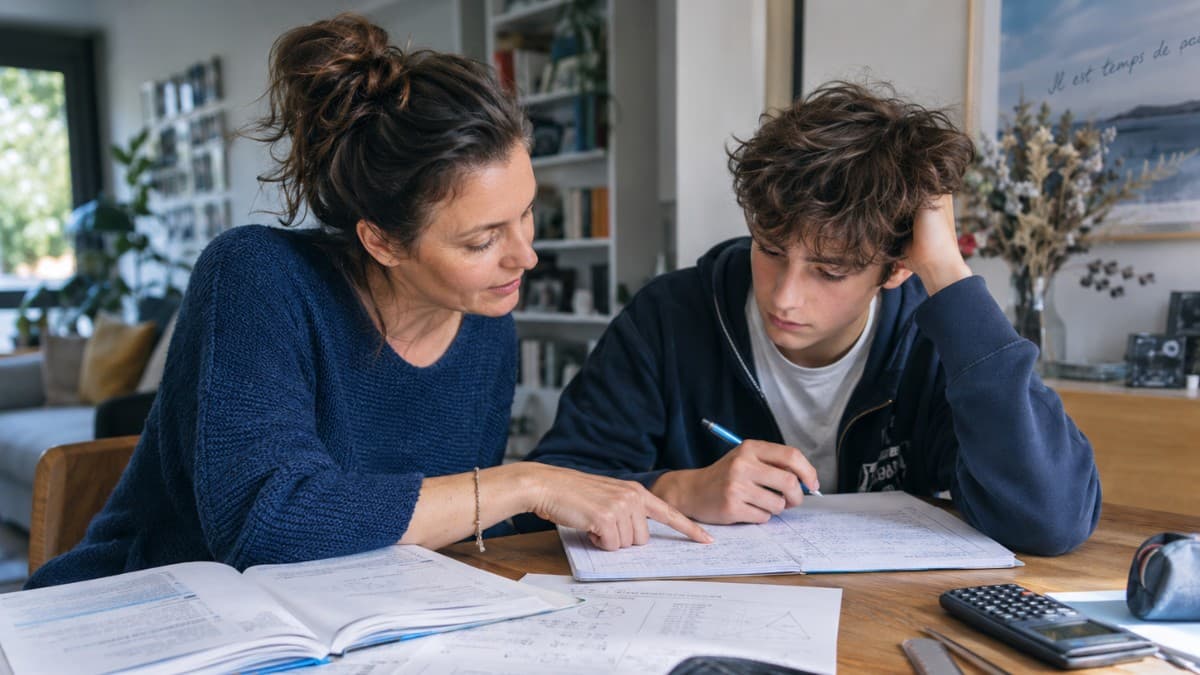
To rebuild the basics of algebra without redoing everything, start with a targeted diagnosis: numerical calculation, the meaning of equality, reading an expression, the status of the letter, substitution. Depending on the year group (6e, 5e, 4e, 3e, the four years of collège), remedial work focuses on a few specific automatic skills, then on reusing them independently in a different exercise. Typical mistakes should be told apart: rule, technique or strategy.
Sébastien Lochon·23 October 2026·9 min read
School success and study choices
To make progress in maths in 3e (the final year of collège, lower secondary school), pinpoint your recurring mistakes (a missing prerequisite, a concept not understood, the wrong choice of method, a write-up error), then work through exercises of increasing difficulty. To prepare for the Brevet (the end-of-collège exam), practise regularly on automatic skills without a calculator, written-up problems and official papers under exam conditions.
Sébastien Lochon·23 October 2026·12 min read
School success and study choices
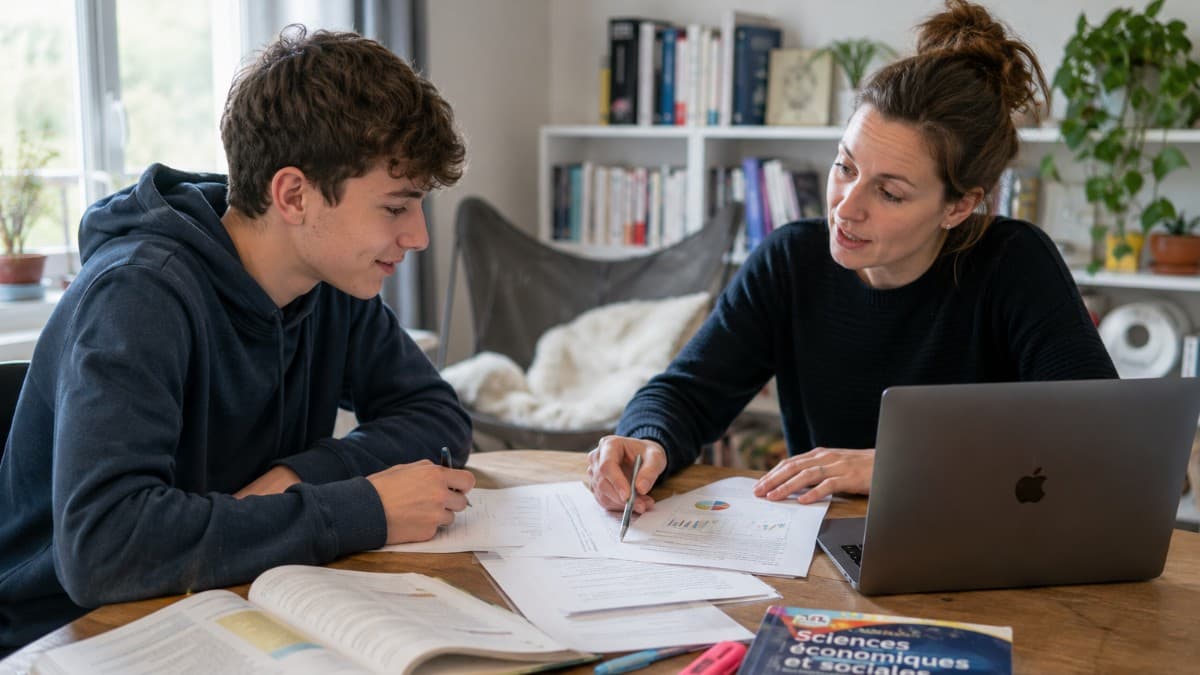
Private tutoring in SES (Economic and Social Sciences) at lycée (upper secondary school) is above all useful when it teaches the student to connect three skills: mastering the curriculum’s concepts, using documents precisely and building a reasoned argument. In Première as in Terminale (the second and final years of lycée), knowing your lessons is therefore not enough. You need to be able to explain an economic or social mechanism, interpret a figure, select a relevant example and organise an answer suited to the instruction. Good SES support should identify the link in the chain that is really blocking the student, then train them on specific tasks rather than simply going over the lesson again.
Sébastien Lochon·23 October 2026·11 min read
School success and study choices
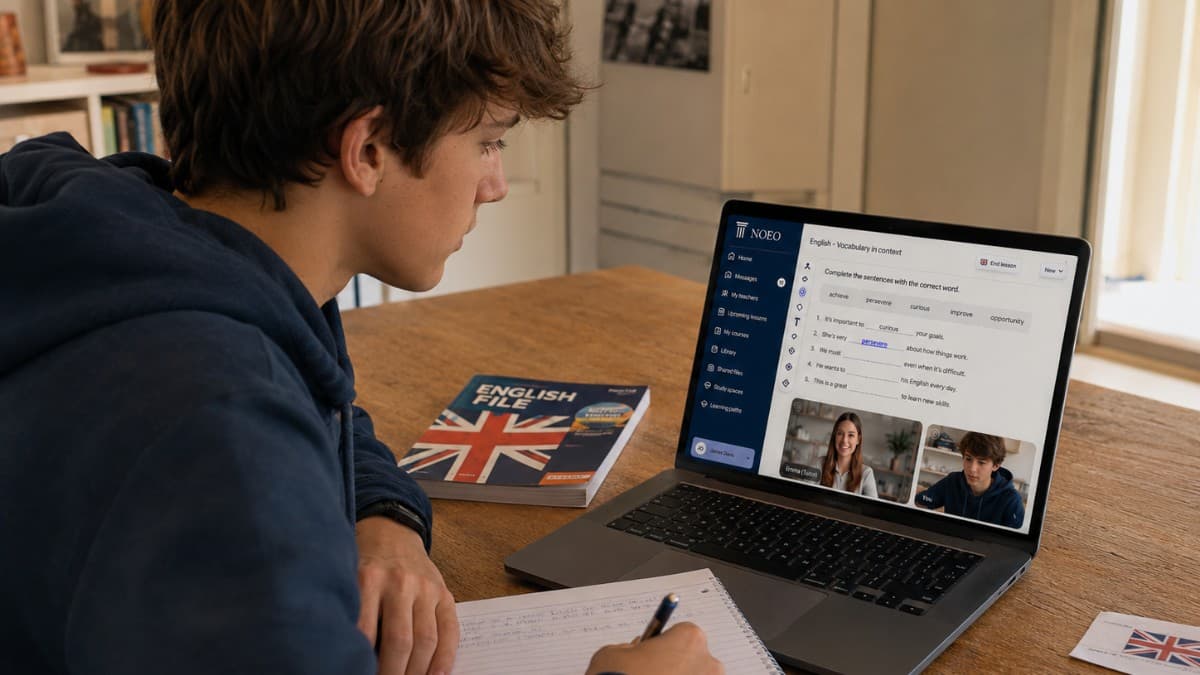
To make progress in English at collège (lower secondary school) and lycée (upper secondary school), first assess your real skills (listening and reading comprehension, speaking and writing) with simple tests. Adopt a 15-minute daily routine alternating listening, reading and production, reusing vocabulary and grammar in sentences of your own. Learn vocabulary in context (concrete examples, common expressions) rather than in isolated lists, so you remember and apply it better.
Sébastien Lochon·23 October 2026·13 min read
School success and study choices
The épreuve anticipée (early exam) in maths for students in Première (the second year of lycée) in 2026-2027 is set for Monday 21 June 2027. It lasts 2 hours, without a calculator, and comprises automatic-skills questions (6 points) followed by two or three exercises (14 points). Preparation should begin in the autumn with a diagnosis and work on automatic skills.
Émilie Zajdman·23 October 2026·11 min read