Private tutoring
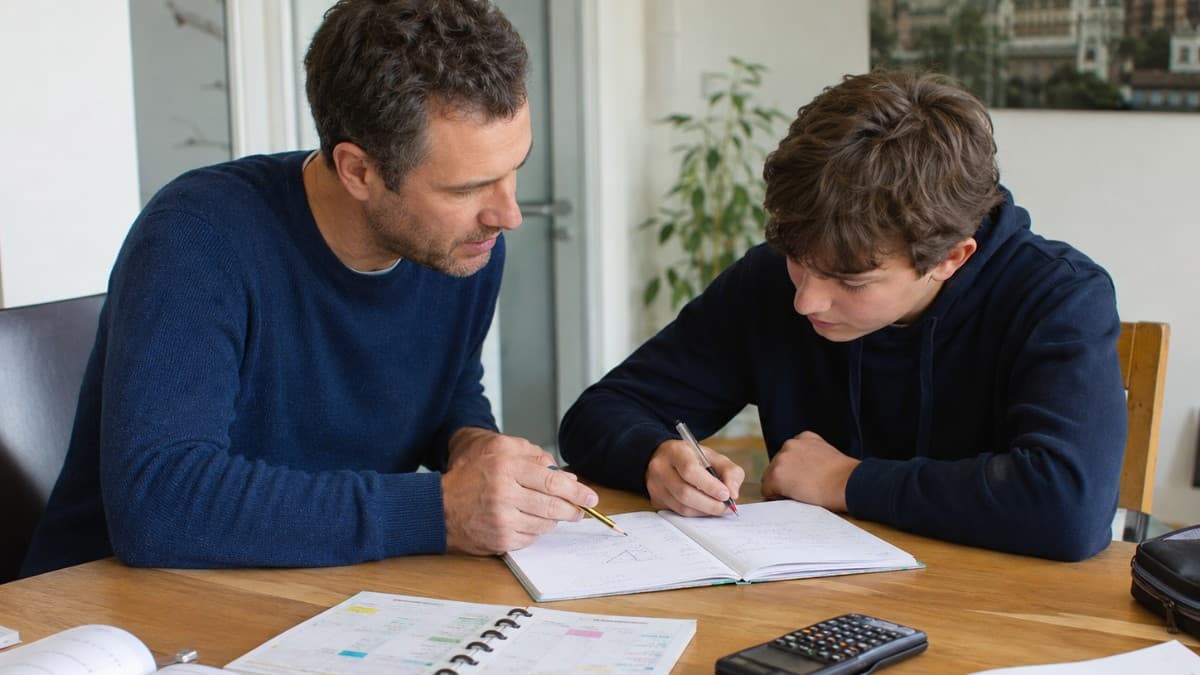
One-to-one tutoring maximises personalisation and the tutor’s attention, but generally costs more. Small-group tutoring (2 to 5 students) lowers the cost per student and brings emulation, but the pace is a compromise. Neither format is always better: it all depends on the student’s gaps, independence and budget.
Émilie Zajdman·23 October 2026·11 min read
Private tutoring
In Terminale (the final year of lycée), private tutoring is effective when it targets a specific difficulty (a specialism, Philosophy, the Grand oral). Start in September for a gap identified in Première, or after the first assessments if the level is uncertain. One session a week is often enough for a targeted need, avoiding overloading an already busy timetable.
Sébastien Lochon·23 October 2026·13 min read
School success and study choices
In Seconde (the first year of lycée), maths difficulties often stem from fragile foundations from collège meeting a higher level of abstraction. Key points to master include algebra, functions and writing up justified reasoning. Targeted catch-up work, combining worked examples and independent exercises, consolidates prerequisites without relearning everything. The new 2026-2027 curriculum raises these expectations, notably on automatic skills and logic.
Émilie Zajdman·23 October 2026·13 min read
School success and study choices
A maths tutoring session at collège (lower secondary school) targets the precise source of the blockage (basic skills, reasoning, method). One session a week is enough for a targeted difficulty; a more intensive pace may be needed when gaps have built up. After 6 to 8 weeks, progress is assessed on independence and fewer recurring mistakes, not only on marks.
Émilie Zajdman·23 October 2026·12 min read
Private tutoring
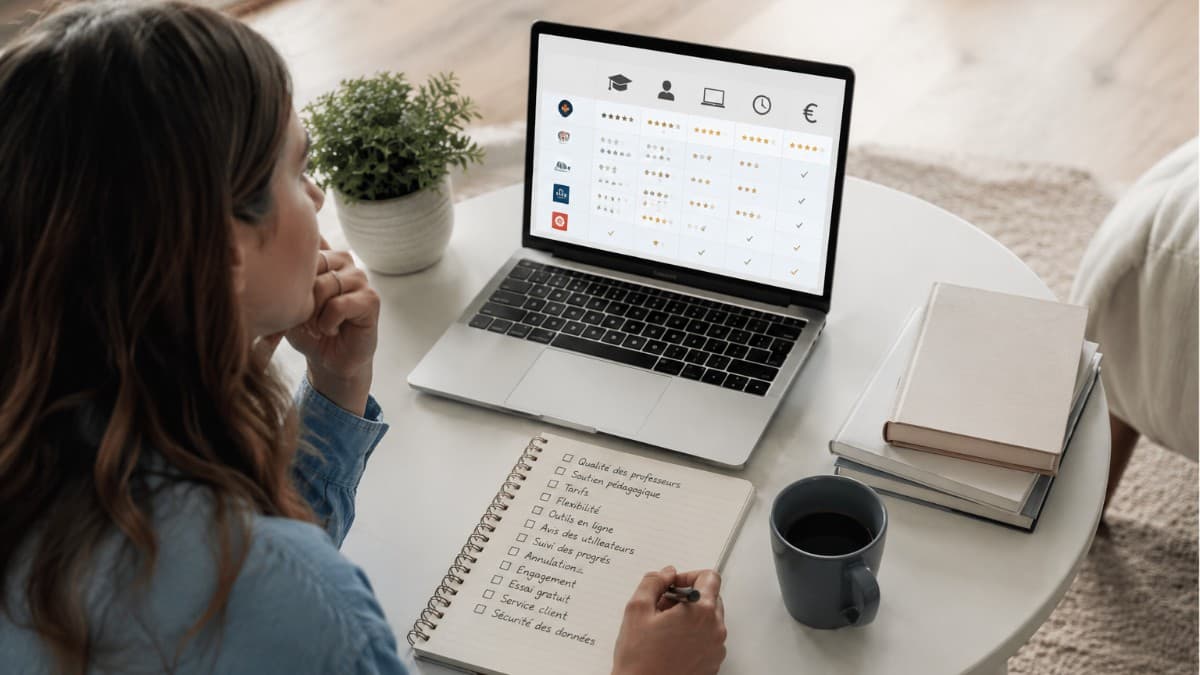
To choose a private tutoring platform, assess 12 key criteria: catalogue model (marketplace or selection), guidance, profile verification, precision of profiles, final price, commitment, session tools, technical reliability, preparation, follow-up after the session, parental oversight and support. These factors determine the quality of the service beyond the hourly rate displayed.
Pierre Basile·23 October 2026·14 min read
Parents and follow-up
A child may need private tutoring when their difficulties become repetitive (accumulated gaps, persistent mistakes, homework that takes too long). Identifying a specific, lasting blockage is more useful than a single bad mark. Targeted support helps consolidate fragile knowledge and avoid the “snowball” effect of gaps.
Sébastien Lochon·23 October 2026·11 min read
Methods and revision
Good school organisation rests on simple principles: start from real constraints, distinguish homework, revision and practice, and build in catch-up margins. An effective schedule must be adjustable and sustainable over the long term, not just ambitious in September.
Sébastien Lochon·23 October 2026·9 min read
School success and study choices
Getting stuck on functions in Seconde (the first year of lycée) often hides a gap in a collège prerequisite: calculating with negative numbers, substitution, reading coordinates, image/preimage vocabulary or switching between representations. To make progress, you need to pinpoint the exact step that fails and test the skill just before it. Mistakes can then be classified into four types: calculation, vocabulary, representation and strategy.
Sébastien Lochon·23 October 2026·9 min read
School success and study choices
A failed Maths test should first serve as a diagnosis: classify the mistakes (calculation, method, prerequisites, autonomy) before starting revision again. Over 14 days, you do not go back over the whole curriculum: you target one or two main causes, check the prerequisites and redo targeted exercises until you can succeed without help.
Émilie Zajdman·23 October 2026·9 min read
School success and study choices
The first month should not be spent redoing chapters, but identifying the precise step where the student gets stuck. By testing a few prerequisites and classifying mistakes, the tutor can build targeted work over two to six weeks.
Émilie Zajdman·23 October 2026·9 min read
Private tutoring
The French tax credit for personal services applies to home tutoring with the tutor physically present, subject to conditions, at 50% of expenses within the annual ceiling (€12,000, which can be increased). Remote academic support, whether via the internet or by correspondence, is explicitly excluded.
Émilie Zajdman·23 October 2026·11 min read
Methods and revision
A flashcard is useful when it asks a precise question, when the student looks for the answer before checking it and when the cards are reviewed at spaced intervals. Stick to one idea per card and vary the types: definitions, distinctions, examples and common mistakes. For complex skills, flashcards remain a complement to practice, not a substitute for it.
Pierre Basile·23 October 2026·11 min read