School success and study choices
To rebuild the basics of algebra without redoing everything, start with a targeted diagnosis: numerical calculation, the meaning of equality, reading an expression, the status of the letter, substitution. Depending on the year group (6e, 5e, 4e, 3e, the four years of collège), remedial work focuses on a few specific automatic skills, then on reusing them independently in a different exercise. Typical mistakes should be told apart: rule, technique or strategy.
Sébastien Lochon·23 October 2026·9 min read
Methods and revision
Never-ending homework can hide three different causes: slow execution, a knowledge gap or an ineffective method. To find out which, a 15-to-30-minute protocol is enough: define the task, try without your notes, deal only with the block, then redo it. Rereading your lesson does not prove you have mastered it; you need to recall or apply it without support.
Sébastien Lochon·23 October 2026·9 min read
School success and study choices
To make progress in maths in 3e (the final year of collège, lower secondary school), pinpoint your recurring mistakes (a missing prerequisite, a concept not understood, the wrong choice of method, a write-up error), then work through exercises of increasing difficulty. To prepare for the Brevet (the end-of-collège exam), practise regularly on automatic skills without a calculator, written-up problems and official papers under exam conditions.
Sébastien Lochon·23 October 2026·12 min read
Parents and follow-up
A low first mark does not mean a drop in level: it reflects a particular situation (chapter, method, stress). What matters is the same mistakes recurring across several assessments despite regular work. Analyse the marked paper and identify the nature of the difficulties before reacting.
Sébastien Lochon·23 October 2026·10 min read
Methods and revision
Spaced repetition means reviewing a piece of knowledge several times, leaving time between each review, rather than concentrating everything into a single session. There is no universal schedule: intervals should be adapted to the deadline, the content and the difficulty encountered. A simple rule: no answer, come back soon; a hesitant answer, a moderate delay; a precise answer, space it out further.
Pierre Basile·23 October 2026·10 min read
Methods and revision
Because rereading confuses familiarity with mastery: as long as the answer is in front of them, the student does not know whether they could retrieve it alone. A quiz forces them to produce an answer without support, which turns the feeling of knowing into observable information. What is more, the effort of retrieving from memory strengthens memorisation, especially when a correction follows.
Sébastien Lochon·23 October 2026·10 min read
School success and study choices
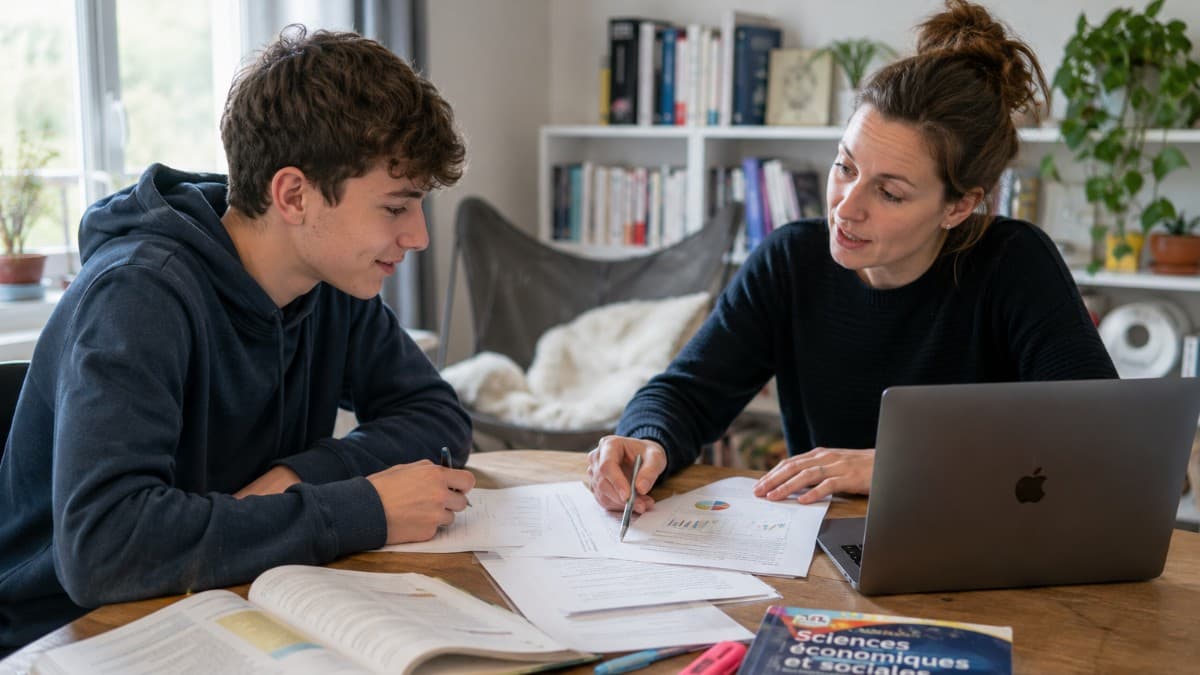
Private tutoring in SES (Economic and Social Sciences) at lycée (upper secondary school) is above all useful when it teaches the student to connect three skills: mastering the curriculum’s concepts, using documents precisely and building a reasoned argument. In Première as in Terminale (the second and final years of lycée), knowing your lessons is therefore not enough. You need to be able to explain an economic or social mechanism, interpret a figure, select a relevant example and organise an answer suited to the instruction. Good SES support should identify the link in the chain that is really blocking the student, then train them on specific tasks rather than simply going over the lesson again.
Sébastien Lochon·23 October 2026·11 min read
Tutors
To give private tutoring sessions online, a tutor needs five key tools: a stable video call (Google Meet, Zoom), an interactive whiteboard (Whiteboard.fi, Miro), a document-sharing system (Google Drive), a reliable schedule (Google Calendar) and a messaging tool for follow-up. The choice depends on the subject and the number of students, with simplicity and less friction as priorities.
Pierre Basile·23 October 2026·12 min read
School success and study choices
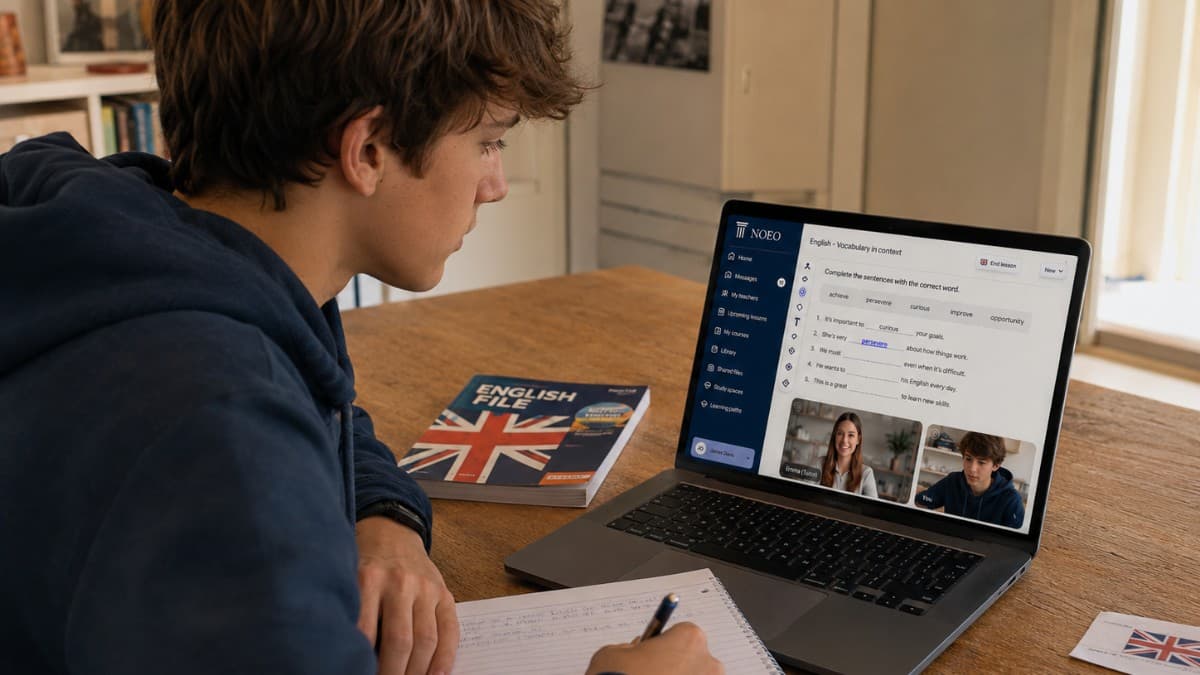
To make progress in English at collège (lower secondary school) and lycée (upper secondary school), first assess your real skills (listening and reading comprehension, speaking and writing) with simple tests. Adopt a 15-minute daily routine alternating listening, reading and production, reusing vocabulary and grammar in sentences of your own. Learn vocabulary in context (concrete examples, common expressions) rather than in isolated lists, so you remember and apply it better.
Sébastien Lochon·23 October 2026·13 min read
Private tutoring
A successful first private tutoring session depends on preparation beforehand: giving the tutor a precise need, recent assessments and the current chapter. The session makes it possible to observe what has been learnt, identify blocks and set concrete objectives. The first four weeks serve to refine the diagnosis and adjust the support.
Sébastien Lochon·23 October 2026·8 min read
Private tutoring
To choose a private tutor, first identify your child’s precise need (gaps, study methods, exam preparation). Then check their mastery of the subject at the right level, their ability to diagnose difficulties and the quality of their explanations. A first session should show teaching that is adapted to the student and concrete follow-up.
Sébastien Lochon·23 October 2026·11 min read
Private tutoring
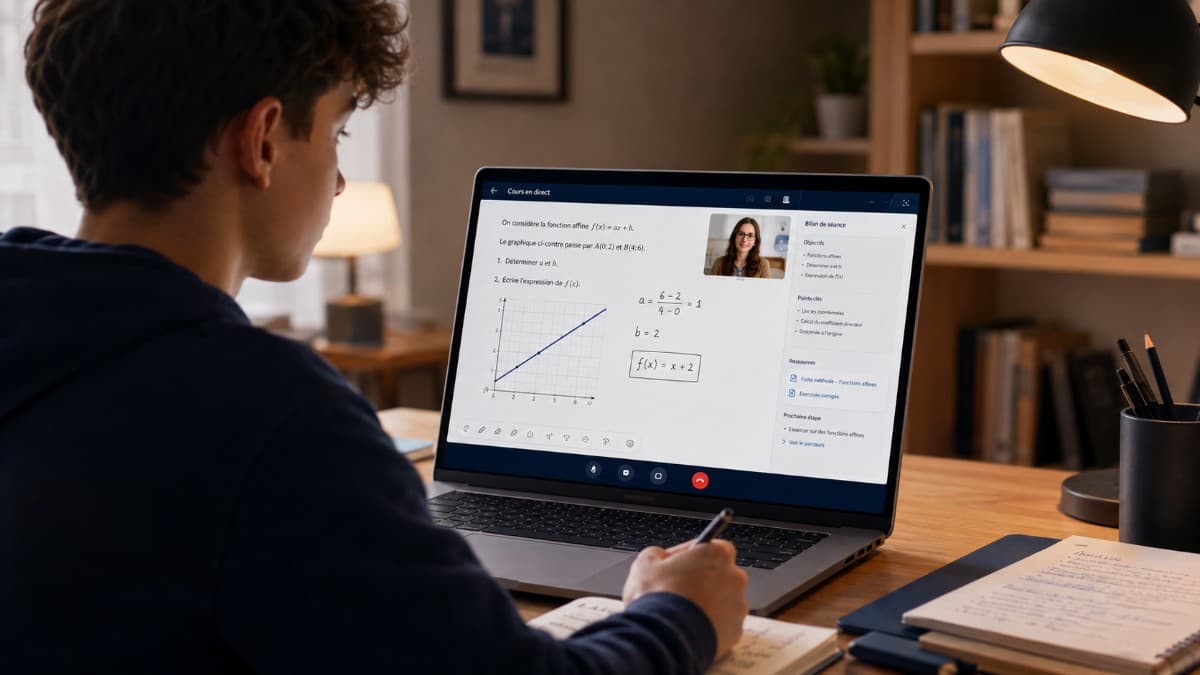
Effective online private tutoring relies on a well-matched tutor, interactive sessions and personalised follow-up. It suits students looking to fill gaps, prepare for exams or work on their method, provided they take an active part. Remote learning offers geographical flexibility but requires independence and good technical conditions.
Pierre Basile·23 October 2026·16 min read